-
Shop
- Adidas
- Advanced Technologies
- AI Skills
- Beauty
- Beauty Guides Collection
- Best-Sellers
- Car Accessories
- Car Buying & Ownership
- Confidence
- Dating & Social Skills
- Digital Resources
- Budgeting & Saving
- Emotional Intelligence
- Entrepreneurship & Business Growth
- Financial Education
- Financial Independence
- Financial Mindset & Psychology
- Goal Setting
- Hobbies
- Leadership
- Mindfulness
- Mindset
- Motivation
- Positive Thinking
- Productivity
- Self Confidence
- Sleep Improvement
- Smart Life with AI
- Stress Management & Relaxation
- Yoga & Mind-Body Practices
- Education & Learning
- Family & Parenting
- Fashion
- Accessories
- Alexander McQueen
- Bags
- Bags & Wallets
- Balenciaga
- Belts
- Blazers
- Bottega Veneta
- Brunello Cucinelli
- Burberry
- Chanel
- Chloé
- Dior
- Dolce & Gabbana
- Dresses
- Etro
- Fendi
- Gucci
- Hats & Hair Accessories
- Hoodies & Sweatshirts
- Jewelry
- Jil Sander
- Jimmy Choo
- Kiton
- Luggage
- Miu Miu
- Off-White
- Outerwear
- Prada
- Rick Owens
- Saint Laurent
- Socks & Tights
- Sweaters & Cardigans
- The Row
- Tom Ford
- Tops & Shirts
- Valentino
- Valentino Garavani
- Versace
- Vivienne Westwood
- Fashion Accessories
- Gadgets
- Health & Beauty
- Health & Wellness
- Home & Garden
- Home Styling & Organization
- Home Supplies
- Kids & Babies
- Kitchen
- Legend Footwear Brands Collection
- Luxury Brands Collection
- Parenting & Child Development
- Patio, Lawn & Garden
- Personal Growth
- Personal Style & Fashion
- Pet Care
- Pet Lifestyle & Wellness
- Pet Supplies
- Pets
- Sport & Outdoors
- Super Deals
- Travel
- Travel & Adventure
- Wealth
- Wellness
- Popular
- Best deals


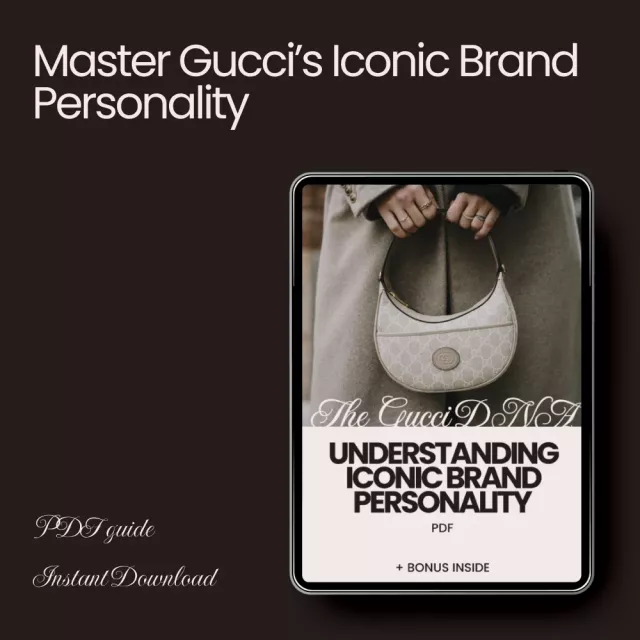
Product Description
Step Inside the Mind of a Luxury Icon
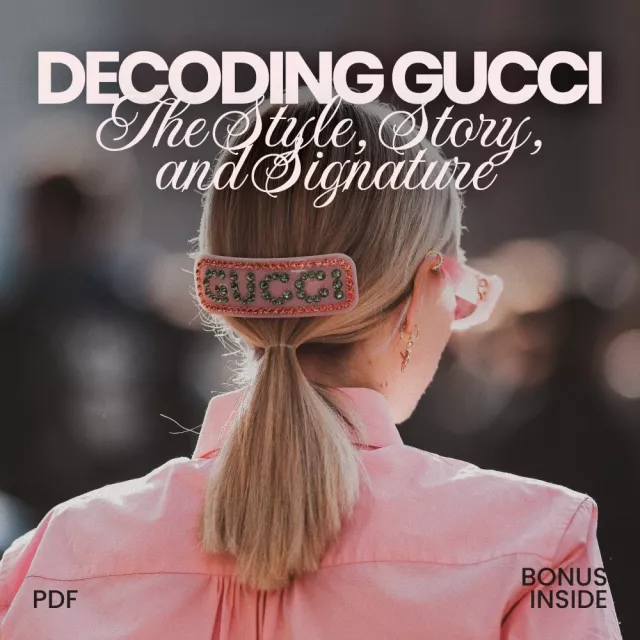
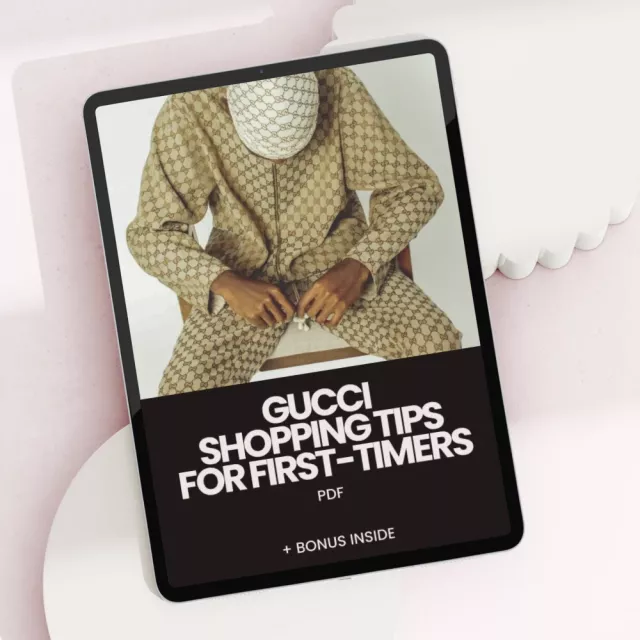
What makes Gucci instantly recognizable—before you even see the logo? The answer lies in its personality. The Gucci DNA: Understanding Iconic Brand Personality is a powerful, in-depth gucci brand personality guide designed to help you decode one of the world’s most influential fashion houses and apply those insights to your own brand. Whether you’re building a luxury label, refining your visual identity, or exploring AI-driven branding tools, this eBook gives you the clarity and strategy you’ve been searching for.
This digital download blends brand psychology, cultural analysis, and modern AI applications into one actionable resource. It is not just theory—it’s a practical roadmap to creating bold, magnetic brand identities.
What’s Inside This eBook
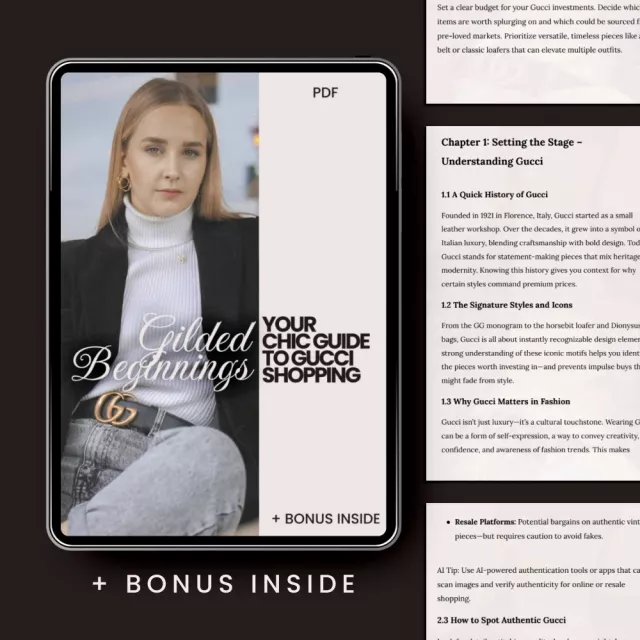
- Chapter 1: The Essence of Gucci – Explore what makes a brand personality powerful and how Gucci evolved from heritage house to modern icon.
- Chapter 2: Gucci’s Voice & Style – Break down tone of communication, visual codes, storytelling methods, and logo usage.
- Chapter 3: Audience & Cultural Connection – Understand Gucci’s ideal customer, cultural leverage points, and emotional loyalty triggers.
- Chapter 4: AI and Gucci – Learn how AI analyzes brand sentiment, supports creative campaigns, and where brands go wrong.
- Chapter 5: Common Branding Mistakes – Avoid misaligned tone, overcomplicated visuals, and cultural stagnation.
- Chapter 6: Prompts and Exercises – Hands-on AI prompts, storytelling scenarios, and brand trait exercises.
- Chapter 7: Next Steps – Build your own brand personality guide while integrating AI without losing authenticity.
Who Is This For?
This gucci brand personality guide is perfect for:
- Brand designers and identity specialists
- Fashion entrepreneurs and startup founders
- Marketing strategists and creative directors
- Students studying branding or luxury marketing
- AI-focused marketers exploring creative automation
Why This Guide Is Different
Unlike surface-level fashion analyses, this eBook combines luxury brand psychology with real-world exercises and AI integration strategies. You’re not just reading about Gucci—you’re learning how to think like a high-end brand architect. With interactive prompts and practical frameworks, this guide transforms inspiration into execution.
If you want to build a brand that feels bold, culturally aware, emotionally magnetic, and future-ready, this resource gives you the blueprint.
Download Your Copy Today
Luxury branding is not accidental—it’s intentional, strategic, and deeply emotional. Download The Gucci DNA: Understanding Iconic Brand Personality today and start crafting a brand identity that stands out, resonates deeply, and evolves with culture. Your next iconic brand move begins here.
Shipping & Delivery
SHIPPING
We are proud to offer international shipping services that currently operate in over 200 countries and islands world wide. Nothing means more to us than bringing our customers great value and service. We will continue to grow to meet the needs of all our customers, delivering a service beyond all expectation anywhere in the world.
Do you ship worldwide?
Yes. We provide free shipping to over 200 countries around the world. However, there are some locations we are unable to ship to. If you happen to be located in one of those countries we will contact you.
What about customs?
We are not responsible for any custom fees once the items have been shipped. By purchasing our products, you consent that one or more packages may be shipped to you and may get custom fees when they arrive to your country.
How long does shipping take?
Shipping time varies by location. These are our estimates:| Location | *Estimated Shipping Time |
|---|---|
| United States | 5-20 Business days |
| Canada, Europe | 5-20 Business days |
| Australia, New Zealand | 5-20 Business days |
| Central & South America | 5-25 Business days |
| Asia | 5-20 Business days |
| Africa | 5-25 Business days |
Do you provide tracking information?
Yes, you will receive an email once your order ships that contains your tracking information. If you haven’t received tracking info within 5 days, please contact us.
My tracking says “no information available at the moment”.
For some shipping companies, it takes 2-5 business days for the tracking information to update on the system. If your order was placed more than 5 business days ago and there is still no information on your tracking number, please contact us.
Will my items be sent in one package?
For logistical reasons, items in the same purchase will sometimes be sent in separate packages, even if you've specified combined shipping.
If you have any other questions, please contact us and we will do our best to help you out.
RETURNS
Order cancellation
All orders can be cancelled until they are shipped. If your order has been paid and you need to make a change or cancel an order, you must contact us within 12 hours. Once the packaging and shipping process has started, it can no longer be cancelled.
Refunds
Your satisfaction is our #1 priority. Therefore, you can request a refund or reshipment for ordered products if:
- If you did not receive the product within the guaranteed time (45 days not including 1-3 day processing) you can request a refund or a reshipment.
- If you received the wrong item you can request a refund or a reshipment.
- If you do not want the product you’ve received you may request a refund but you must return the item at your expense and the item must be unused.
We do not issue the refund if:
- Your order did not arrive due to factors within your control (i.e. providing the wrong shipping address)
- Your order did not arrive due to exceptional circumstances outside the control of aesthere.com (i.e. not cleared by customs, delayed by a natural disaster).
- Other exceptional circumstances outside the control of aesthere.com.
*You can submit refund requests within 15 days after the guaranteed period for delivery (45 days) has expired. You can do it by sending a message on Contact Us page
If you are approved for a refund, then your refund will be processed, and a credit will automatically be applied to your credit card or original method of payment, within 14 days.
Exchanges
If for any reason you would like to exchange your product, perhaps for a different size in clothing, you must contact us first and we will guide you through the steps.
Please do not send your purchase back to us unless we authorise you to do so.
Refunds & Returns
Order cancellation
All orders can be cancelled until they are shipped. If your order has been paid and you need to make a change or cancel an order, you must contact us within 12 hours. Once the packaging and shipping process has started, it can no longer be cancelled.
Refunds
Your satisfaction is our #1 priority. Therefore, you can request a refund or reshipment for ordered products if:
- If you did not receive the product within the guaranteed time( 45 days not including 2-5 day processing) you can request a refund or a reshipment.
- If you received the wrong item you can request a refund or a reshipment.
- If you do not want the product you’ve received you may request a refund but you must return the item at your expense and the item must be unused.
We do not issue the refund if:
- Your order did not arrive due to factors within your control (i.e. providing the wrong shipping address)
- Your order did not arrive due to exceptional circumstances outside the control of aesthere.com (i.e. not cleared by customs, delayed by a natural disaster).
- Other exceptional circumstances outside the control of https://aesthere.com
*You can submit refund requests within 15 days after the guaranteed period for delivery (45 days) has expired. You can do it by sending a message on Contact Us page
If you are approved for a refund, then your refund will be processed, and a credit will automatically be applied to your credit card or original method of payment, within 14 days.
Exchanges
If for any reason you would like to exchange your product, perhaps for a different size in clothing. You must contact us first and we will guide you through the steps.
Please do not send your purchase back to us unless we authorise you to do so.
Customer Reviews
See why hundreds love this product and trust us
Based on 33 reviews
Write a Review
We Think You’ll Love
Top picks just for you











The five core brand traits in Chapter 1 — bold, creative, luxurious, provocative, culturally attuned — gave me an instant framework I could actually use. I printed them on a card and tape it next to my monitor when writing copy.
Chapter 6's interactive storytelling scenarios were surprisingly engaging. The vintage arcade sneaker launch prompt made me think about campaign copy in a way no other branding guide has. I ended up writing three versions for fun and showed them to my creative director — she said two of them were better than what our agency pitched last quarter. The trait mapping exercise from the same chapter is now part of our team's weekly review process.
The tone section nailed it — bold, provocative, elegant is the perfect three-word summary of how Gucci communicates.
Chapter 3's breakdown of Gucci's ideal customer — demographics, psychographics, behavior — is the clearest audience profile I've seen for a luxury brand. The emotional triggers section explaining how nostalgia, aspiration, exclusivity, and playfulness drive loyalty was especially useful for my own brand strategy work.
The #GucciGram case study in Chapter 1 was a standout detail.
Chapter 5 on branding mistakes is where the real value lives. The misaligning tone and image section called out exactly what I've been doing wrong with my own brand — going too minimal when my identity is supposed to be bold.
Solid guide but the AI sections feel like they're trying to cover too much ground. Chapter 4 would've been stronger with fewer tools mentioned and deeper analysis of one or two examples.
The Gucci Epilogue and Simpsons collab case studies brought the theory to life perfectly 🔥
I manage social media for a boutique fashion label and Chapter 2 on voice and style transformed how I write captions. The tip about asking whether content feels bold, creative, and luxurious before posting sounds simple, but it's become my quality filter. Our engagement went up noticeably within two weeks of applying it. The visual language breakdown — rich greens, reds, golds, eclectic patterns — also helped me build a more cohesive color palette for our own feed.
The exercises throughout each chapter keep it from being just another theory-heavy PDF.
Chapter 7's brand personality guide template is exactly what I needed to formalize my own brand's identity. Document traits, define tone, create use cases — straightforward and actionable.
Interesting read but leans too heavily on Gucci as an aspirational example without acknowledging the brand's controversies or missteps in any meaningful way. The branding mistakes chapter addresses generic pitfalls but not Gucci-specific ones.
The Gucci Changemakers initiative mention in Chapter 3 was a welcome surprise — showing how social impact integrates into luxury branding.
Seven chapters, each one building on the last. Smart structure that rewards reading front to back.
The AI pitfalls section in Chapter 4 was refreshingly honest — losing brand authenticity, creating generic content, over-relying on AI for sensitive messaging. Most guides skip the downsides entirely.
Good content overall. The prompts in Chapter 6 are practical but some feel a bit templated rather than truly reflecting Gucci's edge. Would've liked prompts that pushed further into the provocative and playful traits.
⭐👜🔥💚✨
The visual language section breaking down Gucci's color palette — rich greens, reds, golds, and bold neons — gave me a concrete starting point for my own mood boards.
I teach brand strategy workshops and the trait mapping exercise from Chapter 6 is now a permanent part of my curriculum. Having participants identify which of the five core traits a campaign communicates sparks better discussions than any textbook activity I've used before. The audience alignment exercise pairs perfectly with it — writing how messaging would resonate with a specific segment forces people to think about tone, style, and visual cues simultaneously.
The distinction between eclectic elegance and visual chaos in the overcomplicating section was a lightbulb moment for me.
Loved Chapter 3 but wish the cultural trends section went beyond listing categories like art, music, and digital. Specific campaign examples for each would've made it more tangible.
The AR try-on case study in Chapter 4 was the most compelling example of AI in fashion I've read anywhere.
❤️👌🐍🔥
The failing to evolve with culture section is a warning every heritage brand needs to hear. Gucci's embrace of NFTs and AR as examples of staying relevant was well chosen.
Decent guide for beginners but felt surface-level for anyone already working in brand strategy. The exercises are the strongest part — the actual content could dig deeper into the competitive dynamics that shape Gucci's positioning.
The prompt for generating a mood board blending 1970s Gucci heritage with modern streetwear aesthetics was the first AI prompt from any guide that actually gave me usable output 👏
This reframed brand personality from abstract concept to practical toolkit for me.
Chapter 2's storytelling section on how Gucci campaigns function as mini-narratives — blending history, fantasy, and contemporary culture — changed how I approach my own content calendar. Every post now has a story arc, not just a product shot.
Appreciate the repeated emphasis on human oversight for AI outputs. That message needs to be louder in every branding guide.
Wish it covered the post-Michele era and how the brand personality is shifting under new creative direction. Everything else is well done though.
💯✨👜⭐🔥👏
The quarterly exercise suggestion at the end of Chapter 7 — running scenario-based campaigns and AI prompt tests regularly — is the kind of operational advice that turns a one-time read into an ongoing practice.
The concept of brand personality as character in a story from the opening of Chapter 1 set the perfect tone for everything that followed.